Political Roadmap for Afghanistan 8am.media May 17, 2026
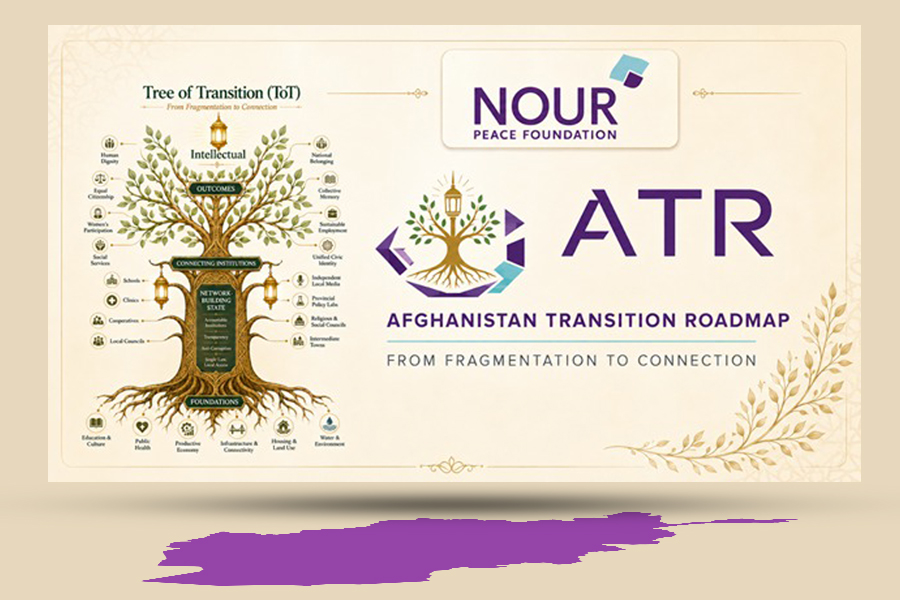
ATR: From Political Roadmap to Everyday Life in Afghanistan
The discussion of a roadmap for Afghanistan’s future has become a shared language across political circles, the diaspora, and intellectual forums. Each group seeks to present its own vision of what lies ahead: a future shaped by a constitution, political participation, women’s rights, justice, peace, and a new order. A society living under the weight of poverty, repression, migration, and the absence of any horizon needs a picture of the future. Yet the central question remains: do these roadmaps actually connect with people’s lives, or do they linger at the level of elite discourse?
Comprehensive Composite Roadmap (CCR) 8am.media April 19, 2026
A Sympathetic Critique of the Comprehensive Composite Roadmap (CCR)
In recent months, I have come across various initiatives aimed at building consensus among Afghanistan’s political and civic forces. Many of them, despite good intentions, have remained at the level of slogans or symbolic unity. In this context, the Mosaic Foundation’s Comprehensive Composite Roadmap (CCR) stood out to me because it approaches Afghanistan’s crisis in a deeper, more structural way and seeks to move beyond simple opposition to the Taliban.
Afghanistan and Modernity 8am.media September 2, 2025
Why Does Afghanistan Always Halt at the Threshold of Modernity?
These days, a familiar question circulates among Afghan politicians and intellectuals: how can the Taliban regime be changed or dismantled? Some argue that this transformation must be achieved by any means necessary. Others remain uncertain about the path forward. A few hope that the passage of time will pressure the Taliban into altering their ways, while some still cling to the belief that the movement can somehow be reformed.
8am.media September 13, 2025
The Philosophy of Primitivism in Afghanistan’s History
When we speak of primitivism, we do not merely mean tribal life or simple living. Primitivism is a historical stage in which social relations are still governed by blood, lineage, tradition, and tribal custom, while rationality, individual autonomy, and civic institutions have yet to emerge. In the early stages of history, primitivism served a purpose: it united tribes and enabled them to resist external enemies. But in today’s world, remaining in a primitive condition is not progress, but backwardness, a burden on society.
Afghan Nation 8am.media September 14, 2025
Why Didn’t We Become a Nation?
One of the central questions in Afghanistan’s modern history is why we have never managed to form a unified nation. For more than a century, we have had experience with state-building, repeatedly creating new institutions, and, in the past twenty years, we have been presented with unprecedented opportunities to construct a modern nation under extensive Western presence and support. Yet the outcome was not the emergence of a shared identity, but rather a deepening of crises and social fragmentation. Even today, Afghanistan remains less a nation-state than a patchwork of local and fragmented loyalties.
Afghanistan’s Unfinished Transition 8am.media September 23, 2025
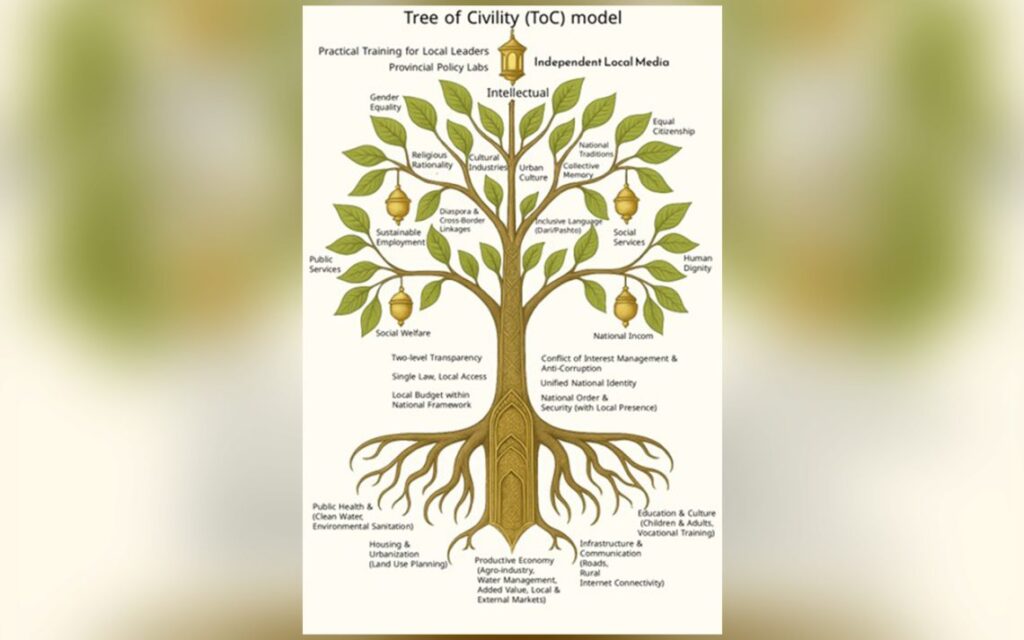
Part I: Introduction to the Tree of Civility: Afghanistan’s Unfinished Transition
This model is composed of six parts: roots, trunk, branches, leaves, fruits, and the guiding light. Each of these components holds a distinct meaning in Afghanistan’s historical transition, and each will be explained separately in the following sections. The plan is to write articles for each part, aligned with Afghanistan’s realities, to serve as a guide for the country’s transition to civility.
History 8am.media November 9, 2025
The Cycle of Elites and the Persistence of Tribal Power
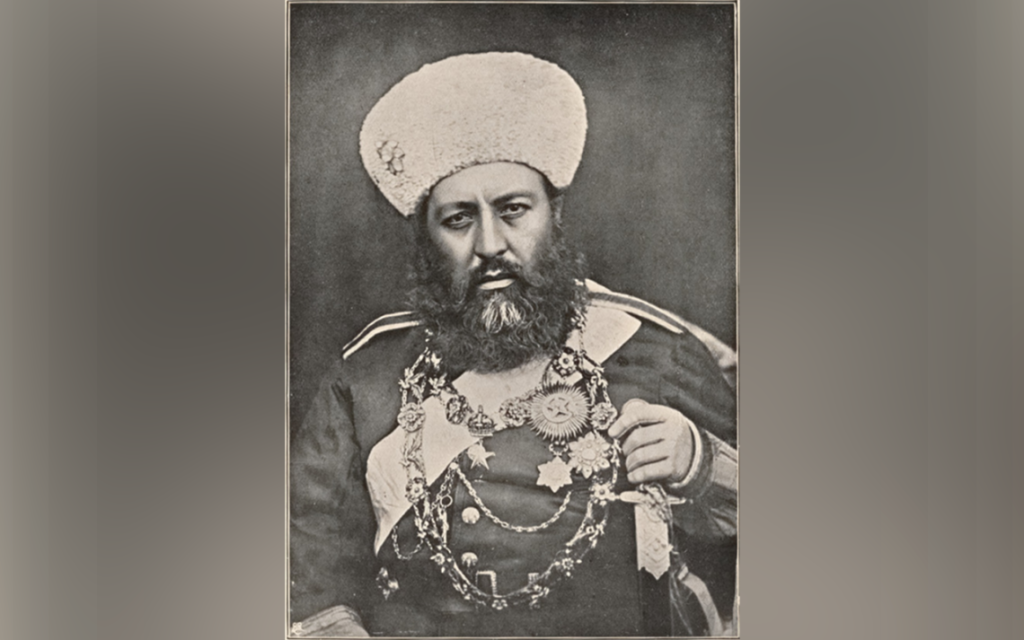
For more than a century, since the reign of Abdur Rahman Khan, Afghan politics has revolved around a recurring pattern: to preserve stability, the center of power co-opts part of the ethnic elite while sidelining the rest. I call this the “Abdur Rahman Scenario”: concentration at the center, concession at the margins, and the exclusion of justice from the core.
Afghanistan 8am.media February 11, 2026
A Confused Diaspora and the Forgotten Question
In recent months, it takes only a few days of following Afghan diaspora discussions on social media to encounter a familiar pattern: waves of recurring questions, long debates, and conclusions that often circle back to the starting point. What political system does Afghanistan need? Are Afghans ready for democracy? What could unite us against the Taliban? These questions are not asked out of irresponsibility. On the contrary, they show that the diaspora still cares, has not disengaged, and still wants to have a stake in the country’s future. Yet at the same time, these questions reveal a deeper reality: confusion.
Afghanistan 8am.media April 4, 2026
The Taliban’s Opponents and Afghanistan’s Crisis of Unity
Afghanistan’s current crisis cannot be explained by the Taliban alone. The Taliban are not an isolated historical accident; they are the latest and most extreme expression of a much older political pattern in Afghanistan: the concentration of power, the suppression of reformist forces, and the repeated reproduction of authoritarian rule.
Afghanistan 8am.media May 5, 2026
Afghanistan: The Repetition of Failure
Over the past half-century, Afghanistan has repeatedly been confronted with grand promises. Each time, those promises arrived under a different name: salvation, revolution, jihad, democracy, state-building, the war on terror, peace, stability, or Sharia. Every era began with a new language, but in many cases ended with the same old result: an unstable system, a wounded society, an unfinished state-building project, and a nation that has still not been given the chance to define itself as a shared political will.