
A practical roadmap for Afghanistan’s social and economic transition.
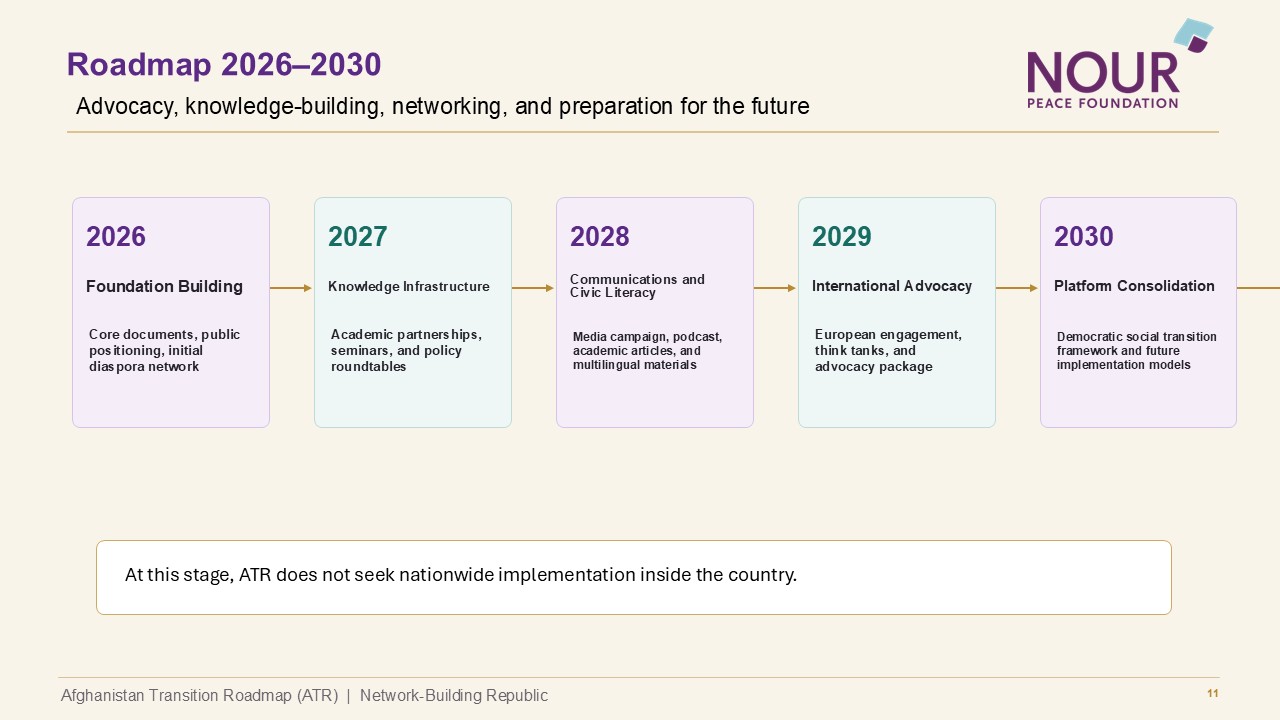
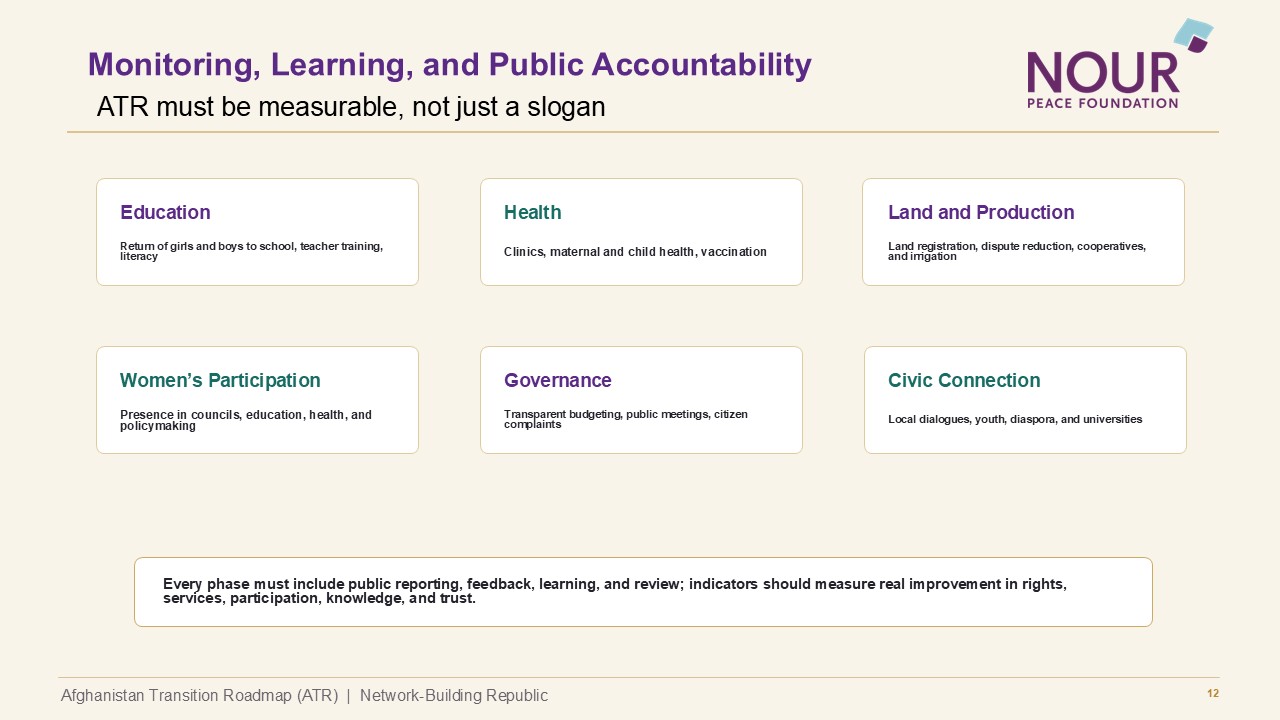
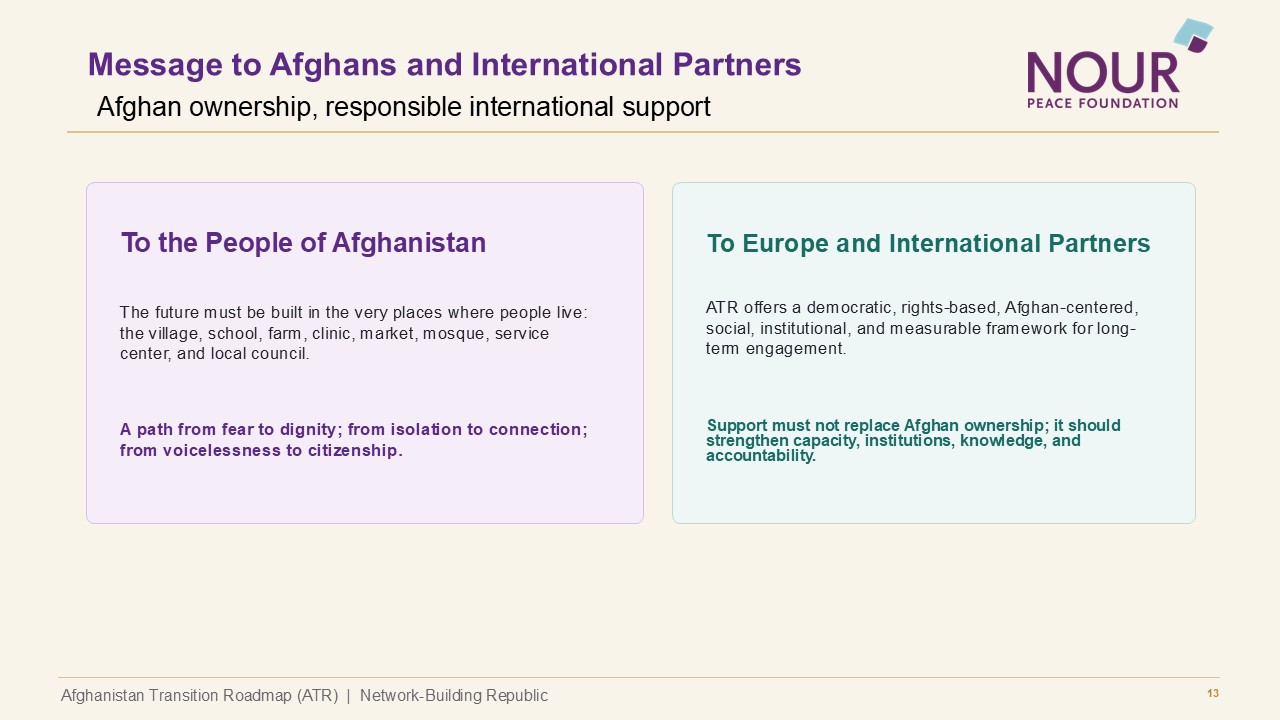
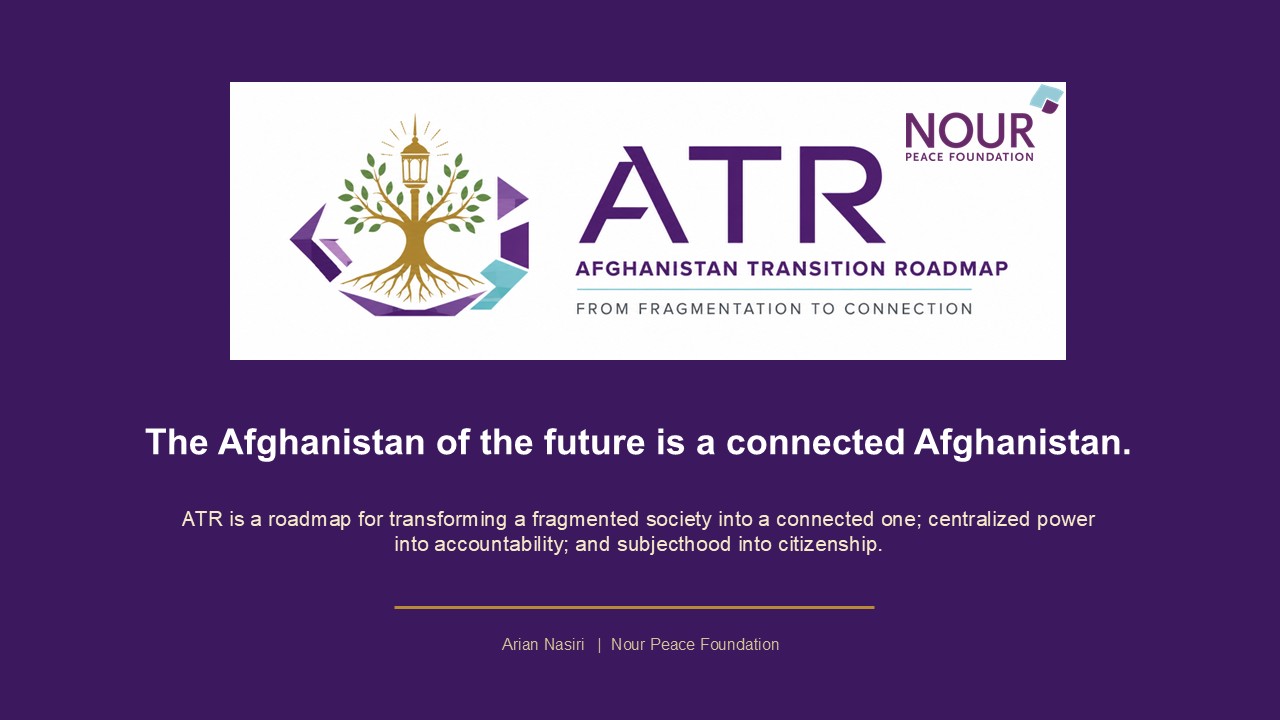
ATR is Nour Peace Foundation’s long-term transition vision for Afghanistan. It connects education, land justice, agriculture, health, public services, women’s participation, and accountable institutions into one practical framework.
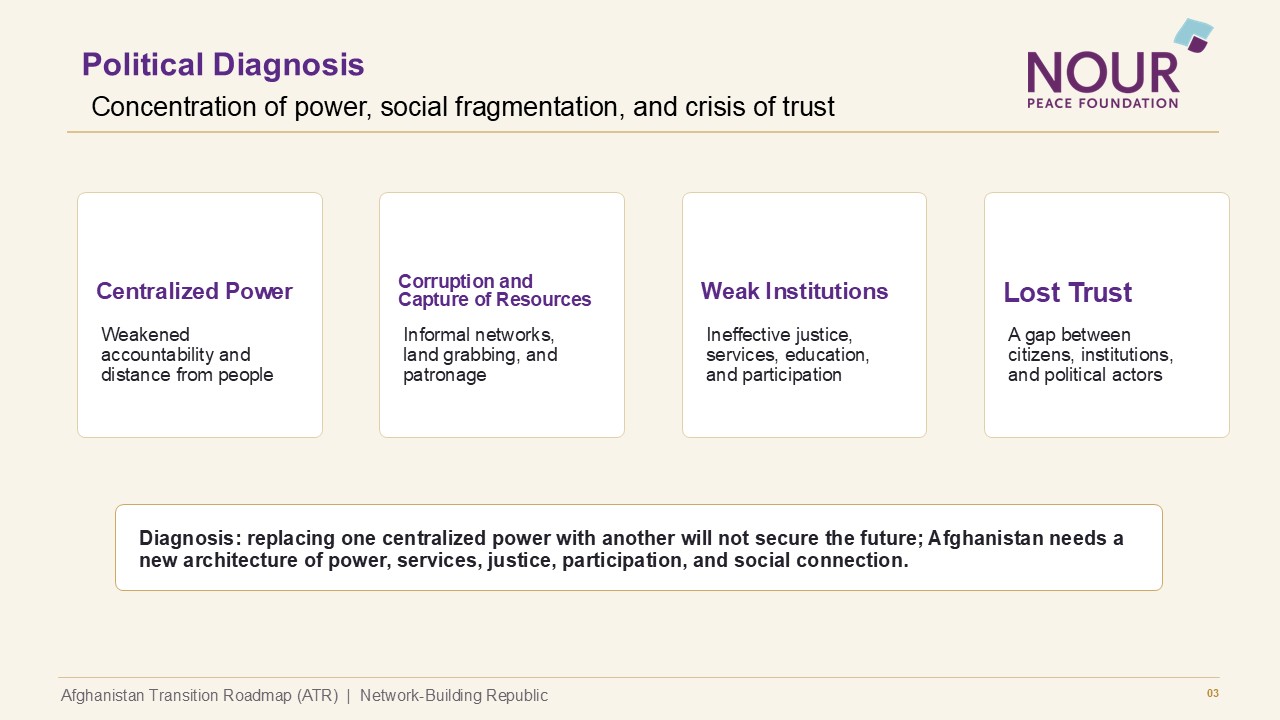
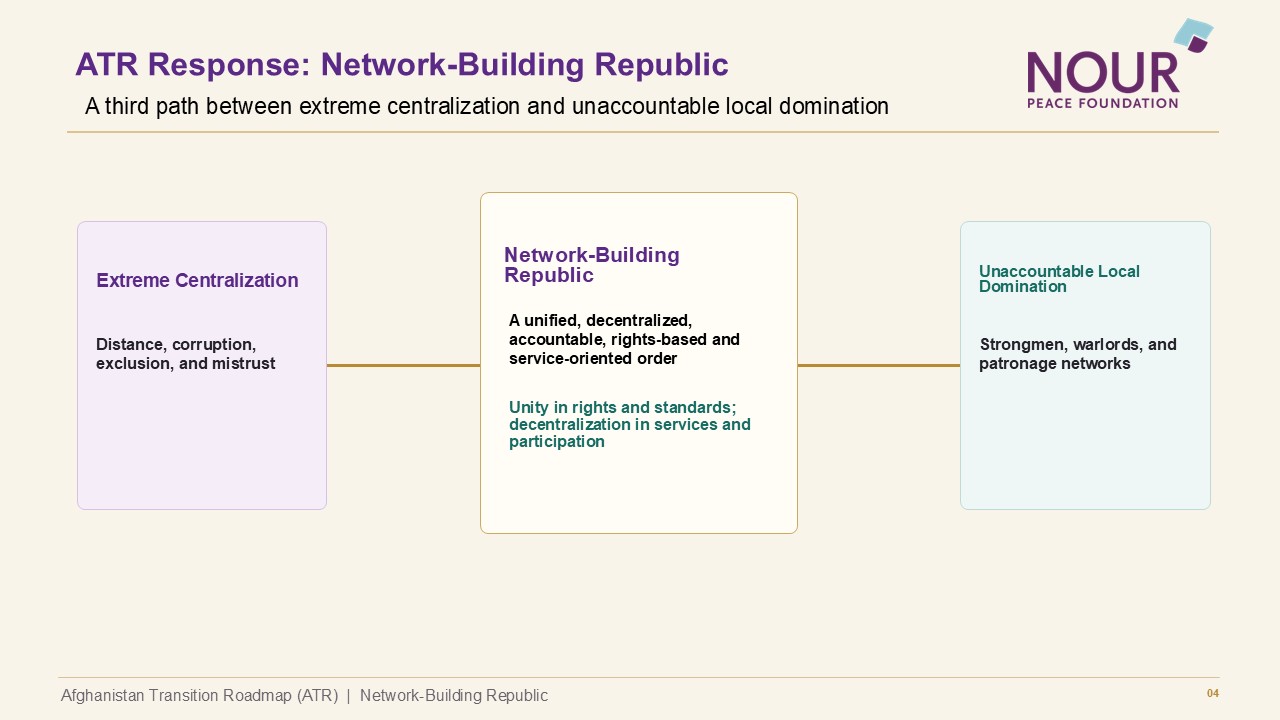
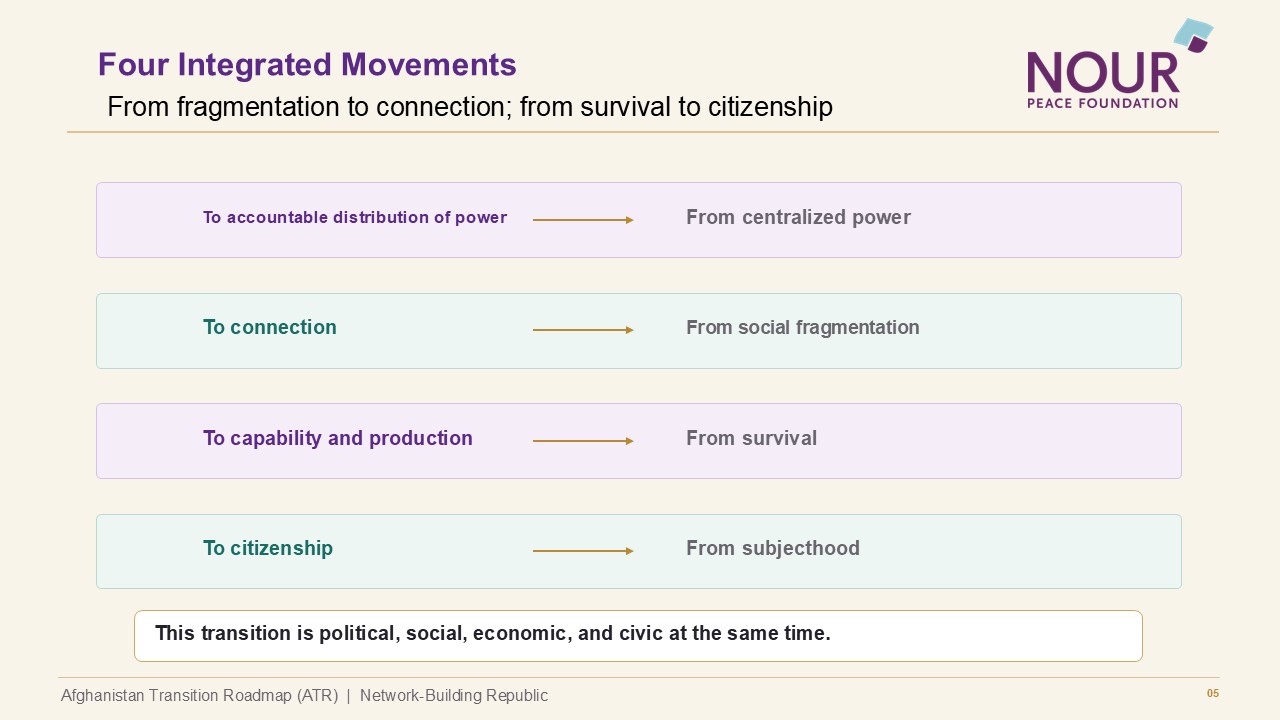
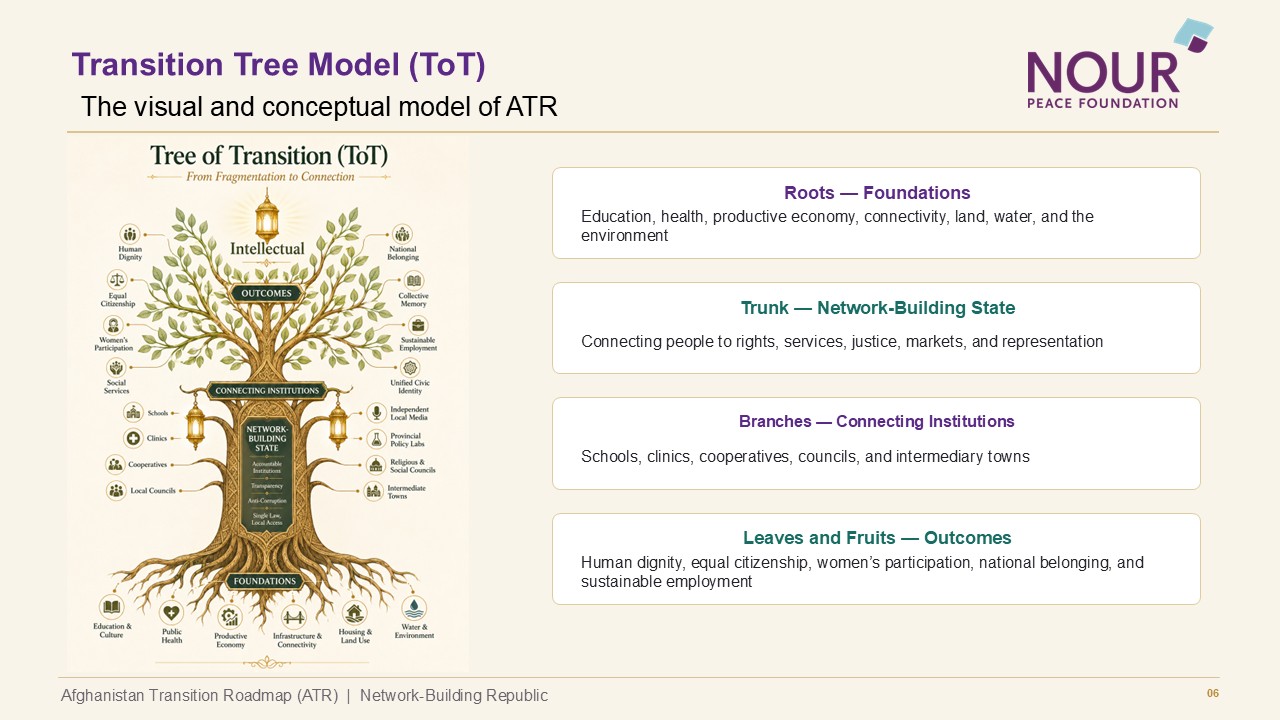
A framework for turning future thinking into social structure.
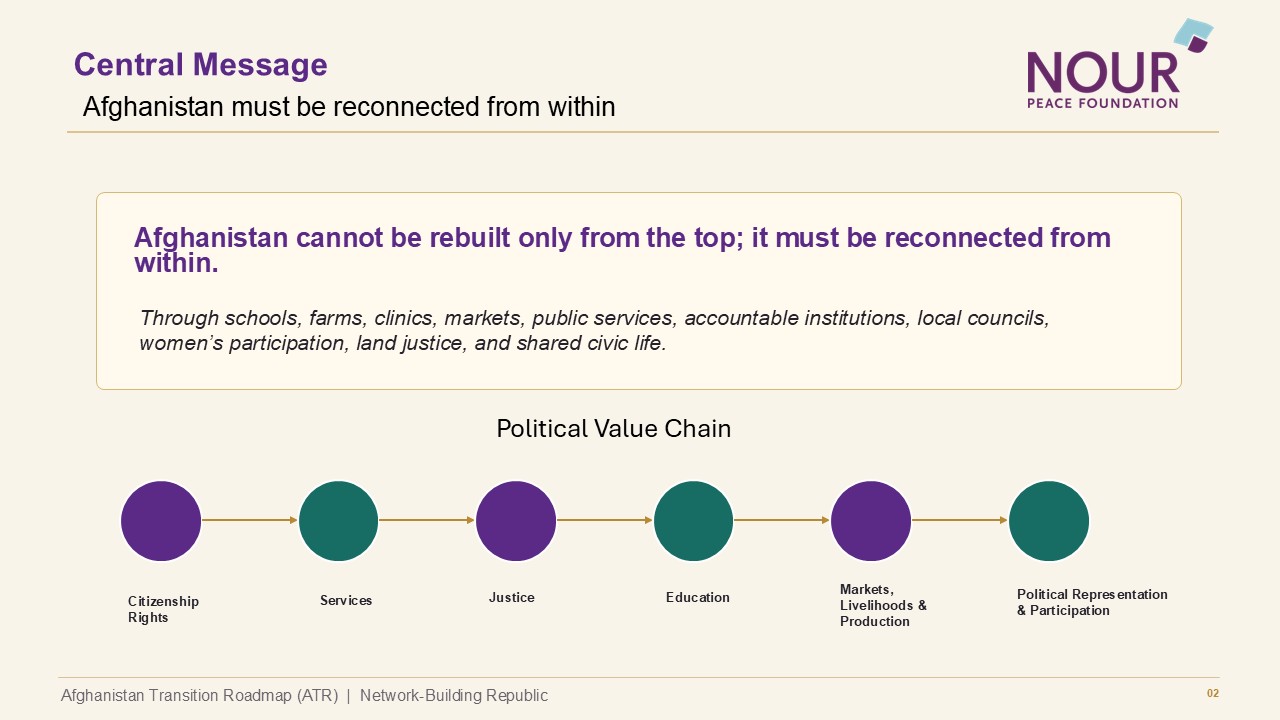
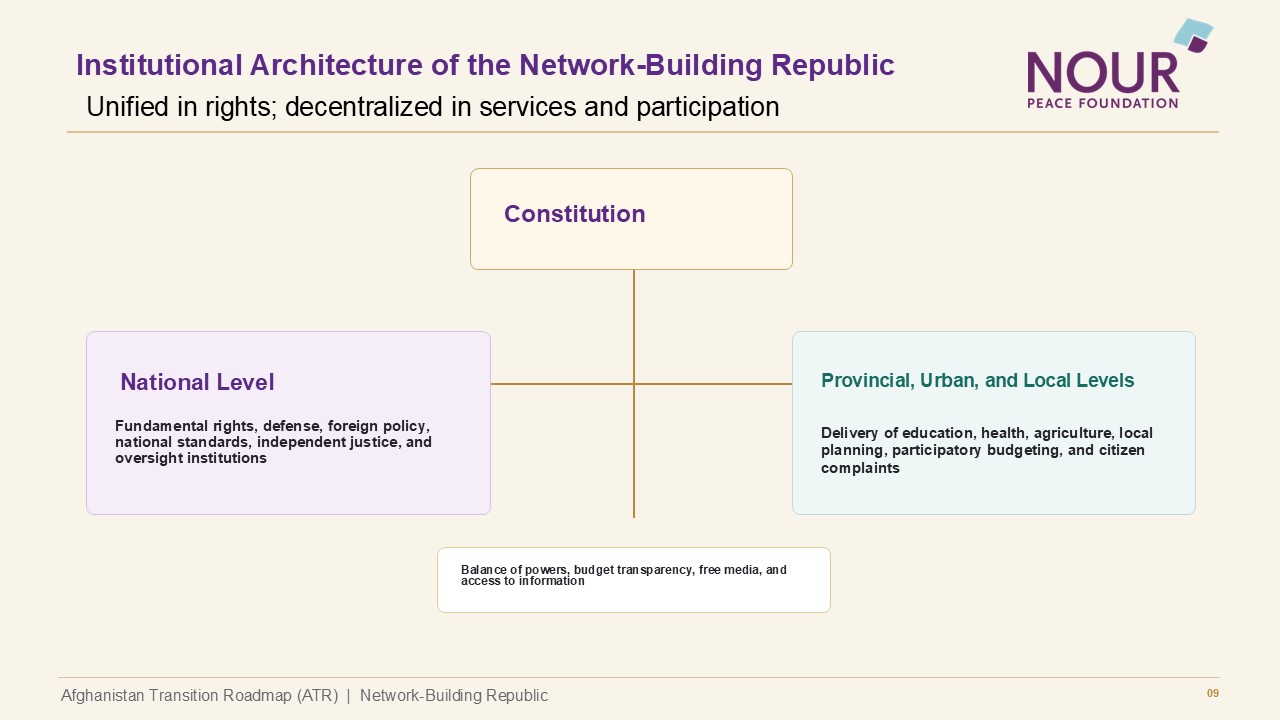
ATR is based on a simple idea: a stable future cannot come only from political change at the top. It requires connected communities, capable institutions, education, services, productive livelihoods, and a visible path from local life to national development.
ATR focuses on the foundations of a connected Afghanistan.
Dignity
Human dignity, equal citizenship, women’s education, public health, and protection of people as citizens are central to the roadmap.
Connection
ATR links villages, intermediate towns, cities, diaspora communities, schools, health services, markets, and public institutions.
Responsibility
The roadmap emphasizes accountable institutions, measurable progress, public service, and transition that people can see in daily life.
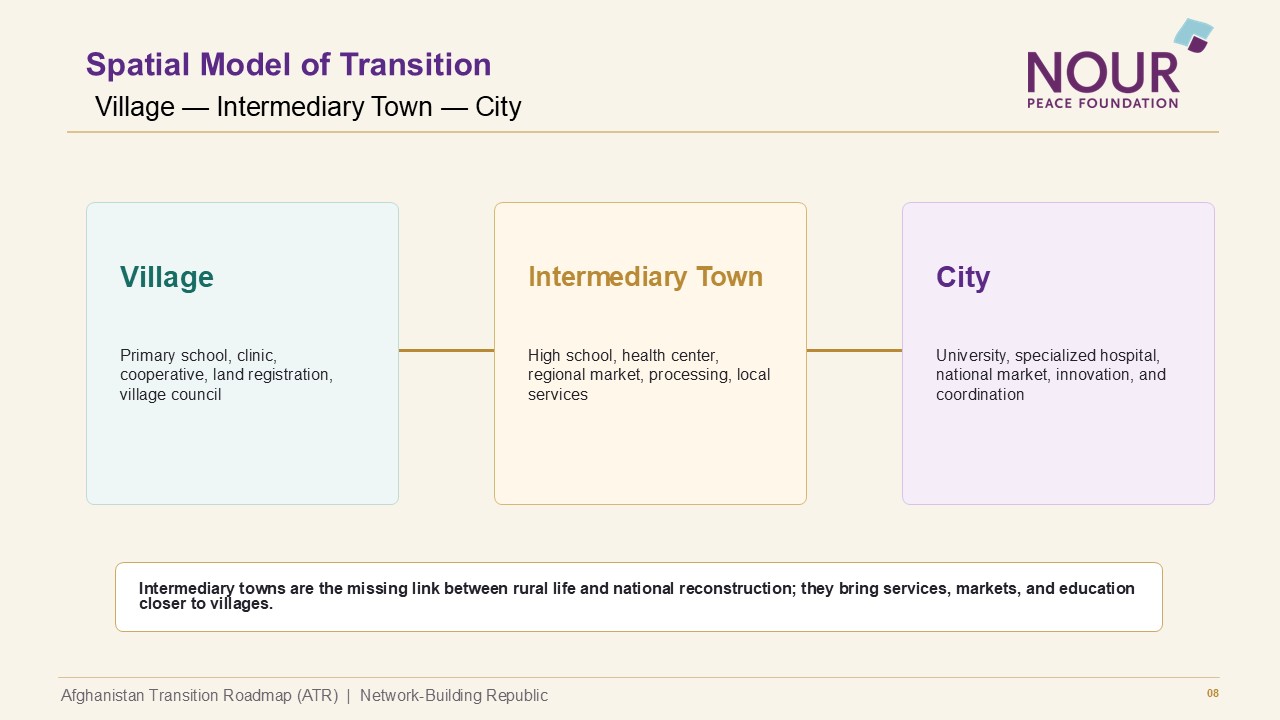
ATR sees Afghanistan as a living network.
Village
Primary education, basic health, adult literacy, local cooperation, and first-level agricultural support.
Intermediate Town
Secondary education, regional clinics, technical training, markets, storage, registration services, and local administration.
City
Universities, specialized hospitals, research centres, higher judicial institutions, larger industries, and national civic links.
Read the short summary of the ATR program.
Visitors can open the ATR PDF in a separate page to read it online. After reading, they can also download the document directly from this section.
Short ATR Program
Read the ATR program in a separate page. You can also download the PDF document after opening it or by using the direct download button below.
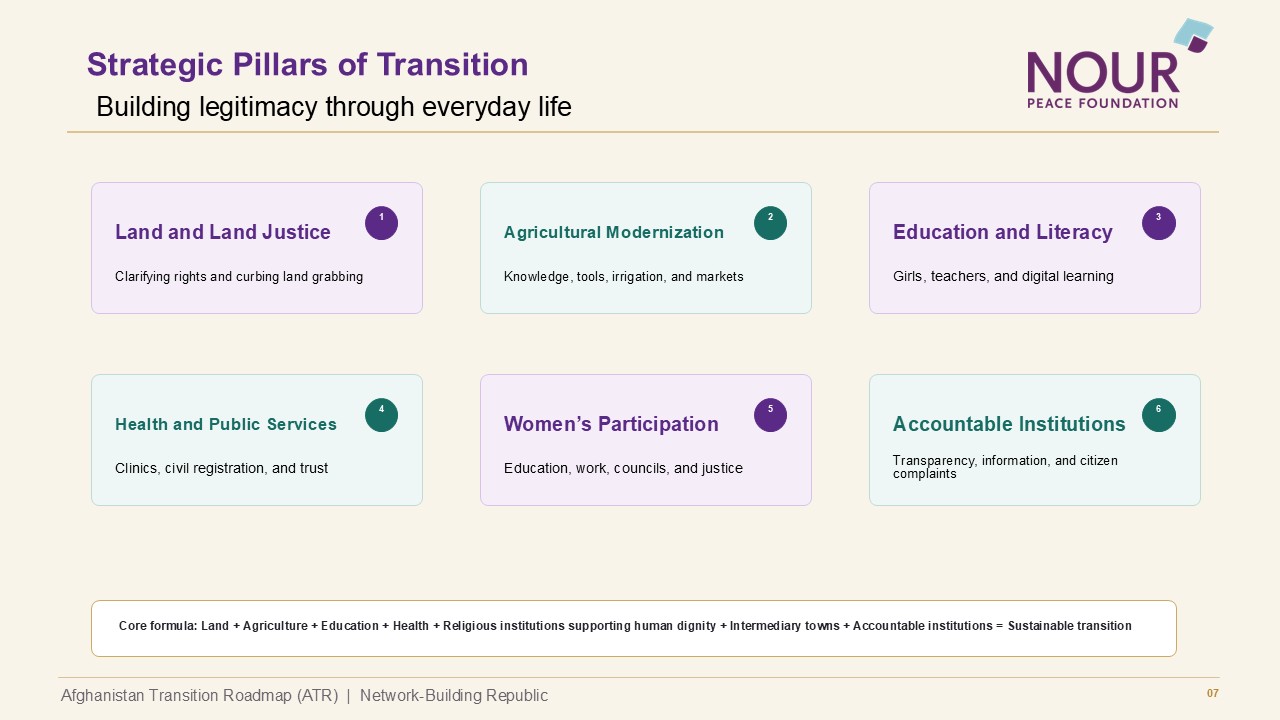
ATR brings several foundations into one transition vision.
Land justice & agricultural modernization
Secure land rights, reduce illegal seizure, strengthen farmers, build cooperatives, storage, processing, irrigation, and market access.
Education, literacy & capability
Build a connected learning path from village schools to town-level secondary education to city-level higher education, while expanding adult literacy.
Health, services & human dignity
Make basic, regional, and specialized care part of a visible service structure that restores trust and strengthens social resilience.
Supportive religion & accountable institutions
Align religious knowledge, civic responsibility, local councils, and public institutions around dignity, education, justice, cooperation, and peace.
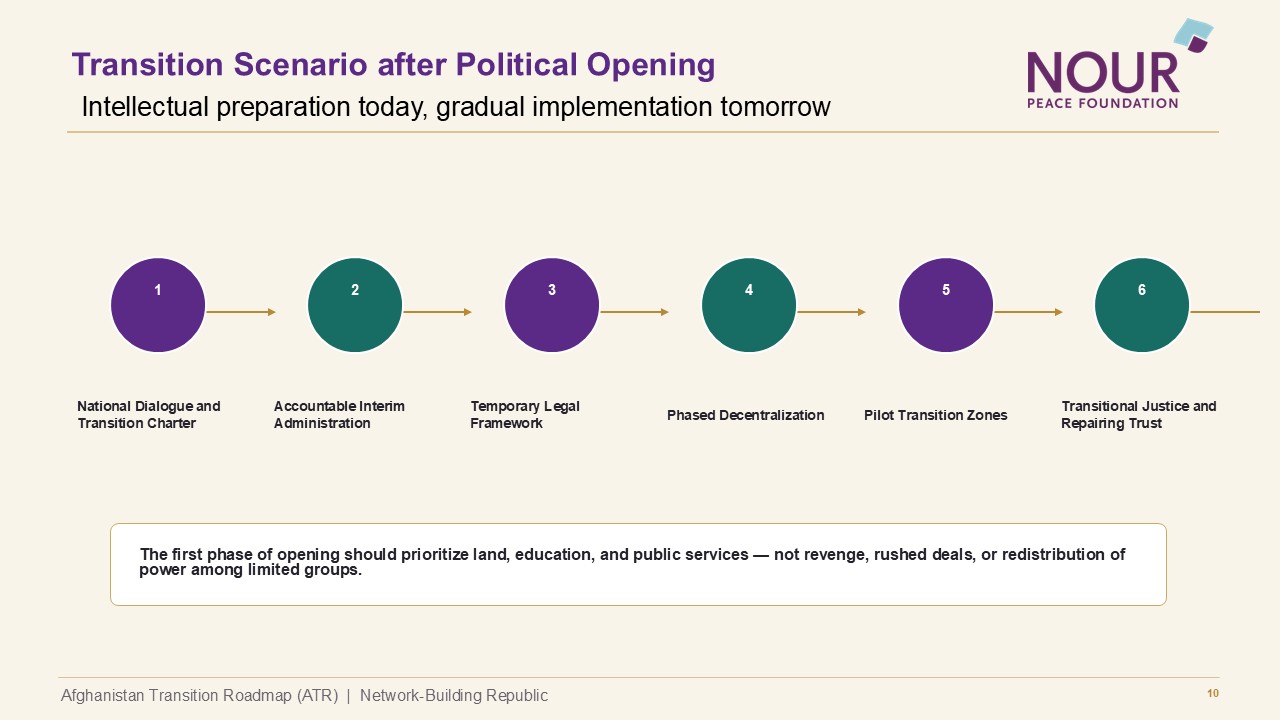
ATR is designed to turn hope into structure: and structure into daily dignity, learning, production, service, trust, and citizenship.